

Handmade Ceramics & Porcelain
What Is Limoges Porcelain? And Why Does It Matter for Your Table?
Mar
So What Exactly Is Limoges Porcelain?
If you’ve ever held a really fine porcelain cup up to the light and noticed it was almost see-through, chances are you were holding Limoges porcelain. It’s a specific type of hard-paste porcelain made from kaolin — a pure white clay that was first discovered near the city of Limoges in central France back in 1768.
That discovery changed everything. Before kaolin was found in Europe, fine porcelain had to be imported from China. It was expensive and rare. Once European artisans got their hands on this clay, they could finally produce porcelain tableware that matched (and sometimes beat) the Chinese originals.
What sets Limoges porcelain apart from regular ceramics? Three things: the raw materials, the firing process, and the level of craftsmanship involved. Let’s break each one down.
The Raw Materials: Why Kaolin Clay Matters
Not all clay is the same. Limoges porcelain starts with a mix of kaolin, feldspar, and quartz. Kaolin is the star ingredient here — it’s what gives the porcelain its bright white color and that beautiful translucent quality when you hold it up to light.
The purity of kaolin is critical. Lower-quality clays produce grayish or yellowish results. Kaolin from the Limoges region (and similar high-grade sources used today) produces that clean, luminous white that has made Limoges porcelain famous for over 250 years.
At Kaase Atelier, we use Limoges porcelain clay for every single piece in our collections. Whether it’s a Macaron coffee cup or a Dots & Stripes serving bowl, the foundation is always the same premium material.
The Firing Process: Twice Through the Kiln
Here’s where things get really demanding. Making Limoges porcelain isn’t a one-and-done process. Every piece goes through at least two separate firings in the kiln, and each firing takes patience, energy, and careful temperature control.
The first firing (called “biscuit” or “bisque” firing) happens at around 980°C. This step hardens the clay into a solid but still porous form. It locks in the shape, but the piece isn’t finished yet — not even close.
After glazing, the piece goes back into the kiln for the second firing. This time the temperature climbs much higher — typically between 1250°C and 1400°C. This extreme heat does something remarkable: it fuses the clay particles together in a process called vitrification. The porcelain becomes non-porous, incredibly hard, and develops that smooth glassy surface and subtle glow that makes Limoges so recognizable.
During this second firing, each piece shrinks by about 10-14% compared to its original molded size. That means the artisan has to account for this shrinkage from the very beginning when creating the mold. One miscalculation and the proportions are off.
Why Handmade Limoges Porcelain Is So Labor-Intensive
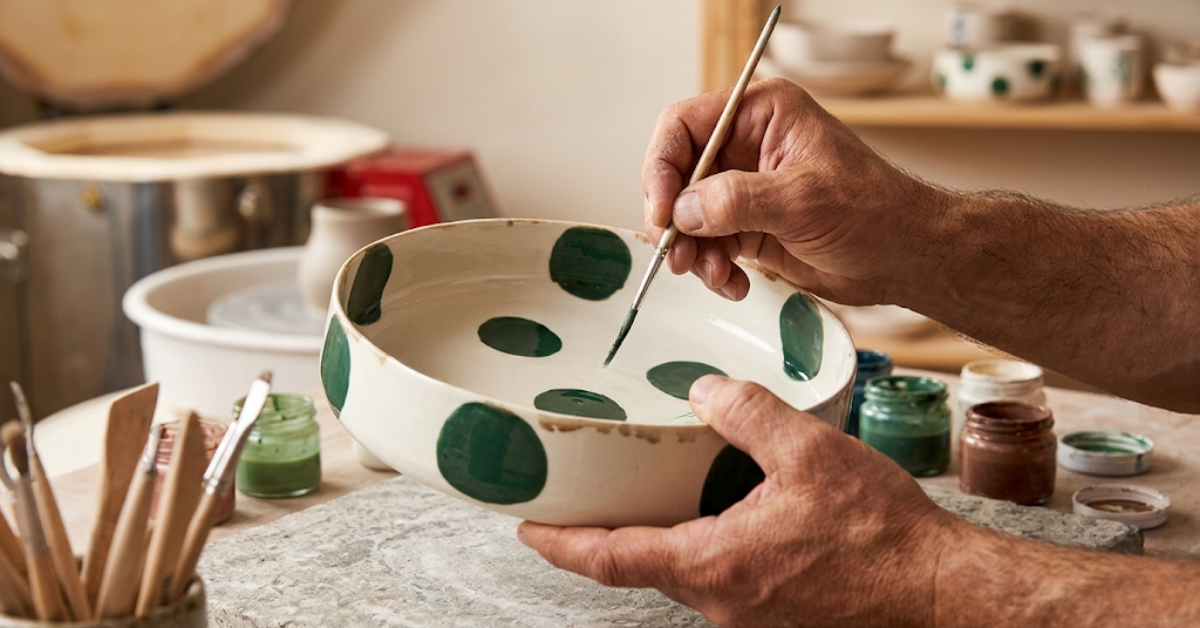
Let’s be honest — making handmade porcelain tableware the traditional way is exhausting work. There is no fast-forward button. Every step takes time, skill, and a lot of physical effort.
First, the clay has to be prepared. The kaolin mixture needs to reach exactly the right consistency — too wet and it won’t hold shape, too dry and it cracks. Then comes hand casting. Each piece is individually poured or shaped by hand. Unlike factory production where machines stamp out hundreds of identical plates per hour, hand casting means every single cup and bowl gets personal attention.
After casting, the pieces need to dry slowly and evenly. Rush this step and you get cracks or warping. Then comes the careful cleaning and smoothing — removing seam lines from molds, refining edges, making sure the surface is as even as possible. This all happens before the piece ever sees the inside of a kiln.
Then there’s the first firing. Twenty-four hours in a kiln at 980°C. After that, the piece gets glazed or painted by hand. If you’re working with colored pigments — like the pastel tones in our Macaron Collection — each color has to be applied carefully because the final shade will change during firing. What looks pale pink going in might come out completely different if the temperature varies even slightly.
Then the second firing. Another long session at extreme temperatures. And after all of that? Not every piece survives. Some crack, some warp, some develop glaze defects. In traditional Limoges production, rejection rates can reach 25% or higher. That’s one out of every four pieces that simply doesn’t make the cut.
This is why handmade Limoges porcelain costs more than factory-made alternatives. You’re not just paying for clay and glaze — you’re paying for days of skilled labor, two rounds of firing, and the reality that a significant portion of production doesn’t survive the process.
How Kaase Atelier Works with Limoges Porcelain
Every piece from Kaase Atelier is handmade in small batches in our studio in Istanbul. We use Limoges porcelain clay, and each piece is hand cast and fired at 1250°C.
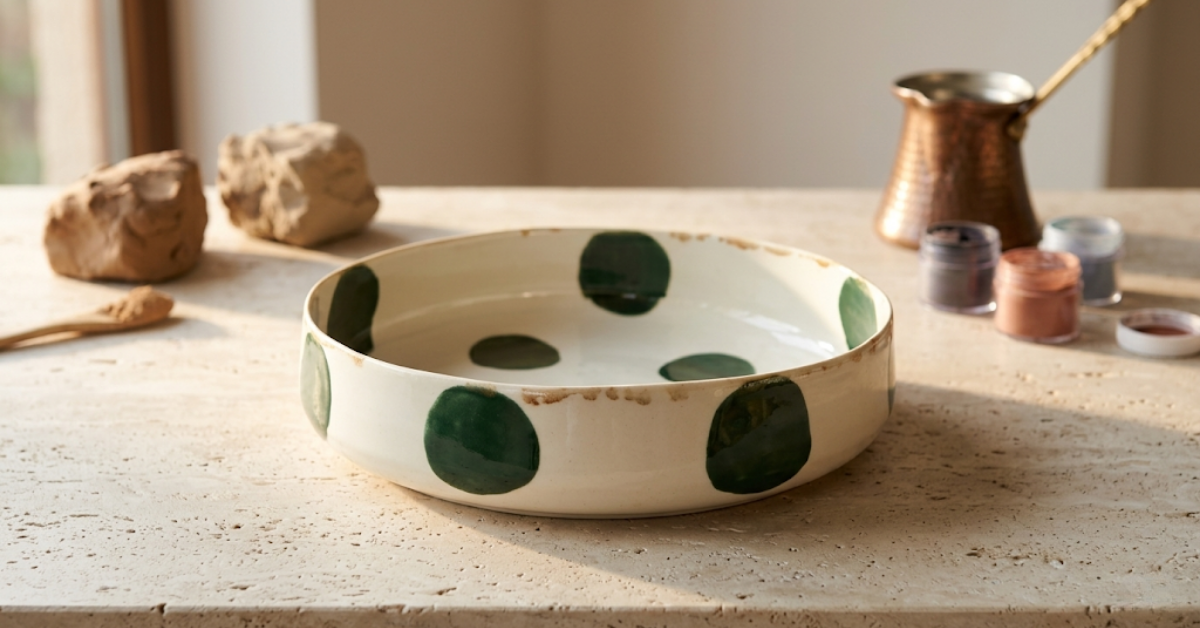
We work across three main collections. The Macaron Collection features coffee cups and plates in soft pastel tones — the color comes from pigment mixed directly into the porcelain clay. The Dots & Stripes Collection offers bigger bowls and plates with geometric patterns. And the Art Series is where you’ll find unique hand-painted scenes on mugs, plates, and bowls.
Because everything is handmade, no two pieces are exactly the same. There might be slight natural variations in color, pattern or small differences in shape. That’s not a defect — it’s the nature of handmade porcelain work and honestly, it’s what gives each piece its own character.
All of our glazes and colors are lead-free, food safe, and non-toxic. You can use them for hot drinks, serving food — everyday use, not just display.
How to Care for Limoges Porcelain
Good news: Limoges porcelain is tougher than it looks. That double firing process makes it quite durable for daily use. Here are some simple care tips to keep your pieces looking great for years:
Hand washing is always the safest option, especially for hand-painted pieces. Use warm water and mild soap. Avoid extreme temperature changes — don’t pour boiling water into a cold cup straight from the cabinet. Let pieces reach room temperature first. Store your porcelain with soft cloth or paper between stacked items to prevent scratching. And while most Limoges porcelain is technically microwave safe, we recommend avoiding the microwave for pieces with metallic or gold-accented glazes.
Frequently Asked Questions About Limoges Porcelain
What is the difference between porcelain and Limoges porcelain?
Porcelain is a general term for ceramics fired at high temperatures. Limoges porcelain specifically refers to hard-paste porcelain made from kaolin clay, following the tradition that started in Limoges, France. The kaolin content and double-firing process give Limoges porcelain its signature white color and translucent quality.
Why is Limoges porcelain so expensive?
The cost reflects the raw materials, the skill required, and the time-intensive process. Each piece goes through at least two firings, with significant rejection rates. Handmade Limoges porcelain from small studios like Kaase Atelier requires even more labor per piece compared to factory production.
Is Limoges porcelain safe for everyday use?
Yes. Limoges porcelain is food safe, non-toxic, and durable enough for daily use. The high-temperature firing process makes it strong and non-porous. At Kaase Atelier, all glazes and colors used are lead-free and food safe.
What temperature is Limoges porcelain fired at?
The first firing (bisque) is typically around 980°C. The second firing reaches between 1250°C and 1400°C, depending on the specific production method. Kaase Atelier fires at 1250°C.
Can you put Limoges porcelain in the dishwasher?
Most Limoges porcelain can handle a dishwasher, but hand washing is recommended for hand-painted pieces to preserve the colors and patterns over time.
Where can I buy handmade Limoges porcelain tableware?
You can browse and buy handmade Limoges porcelain tableware directly from the Kaase Atelier online store. Each piece is hand cast in Istanbul using Limoges porcelain clay and fired at 1250°C. Collections include coffee cups, bowls, serving plates, and more.