

Handmade Ceramics & Porcelain
Handmade vs. Mass-Produced Tableware: What’s the Real Difference?
Apr
What Really Separates Handmade from Mass-Produced?
Walk into any home goods store and you’ll see shelves full of tableware that all looks the same. Same shape, same color, same everything. That’s because it is the same — stamped out by machines, hundreds or thousands per hour.
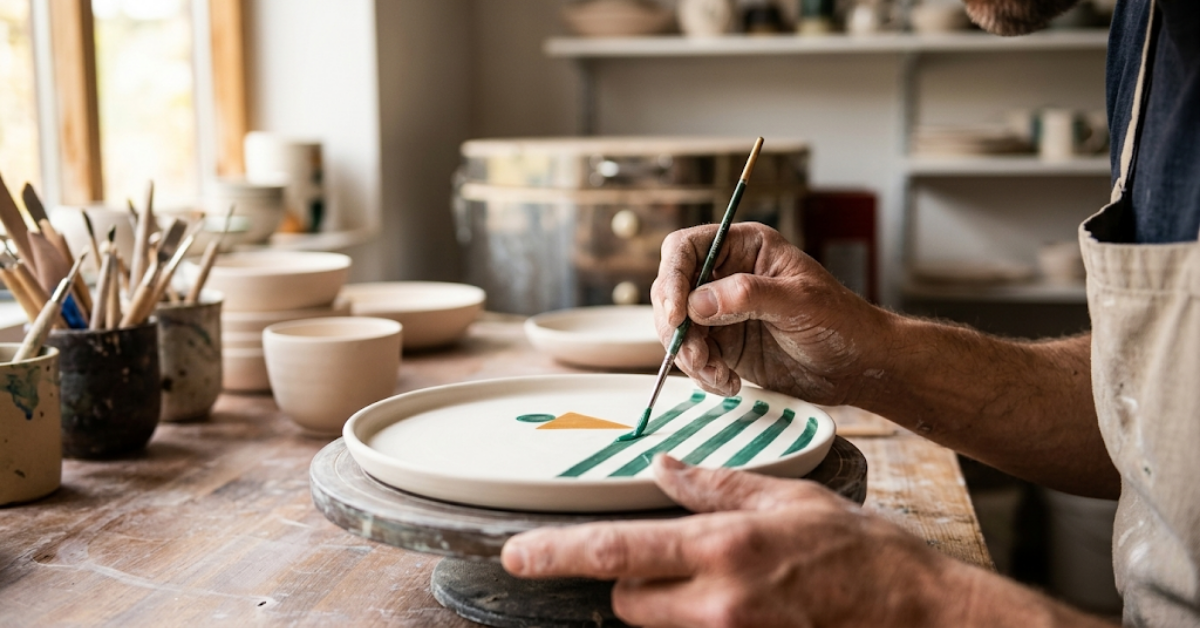
Now pick up a handmade coffee cup. Turn it around. Look at the glaze. Feel the weight. You’ll notice things you don’t see in mass-produced pieces — a slightly different tone where the glaze pooled during firing, a subtle curve that a machine would never allow, maybe a brushstroke that shows the artist’s hand. That’s not a flaw. That’s the whole point.
But the differences between handmade and mass-produced tableware go way deeper than aesthetics. Let’s look at what actually happens behind the scenes.
How Handmade Tableware Is Actually Made
Making handmade ceramics tableware is a long, demanding process. There’s no shortcut and no way to rush it without ruining the result.
It starts with the clay. For high-quality handmade porcelain like the pieces from Kaase Atelier, that means working with Limoges porcelain clay — a mix of kaolin, feldspar, and quartz. The clay has to be prepared to exactly the right consistency before anyone can start shaping.
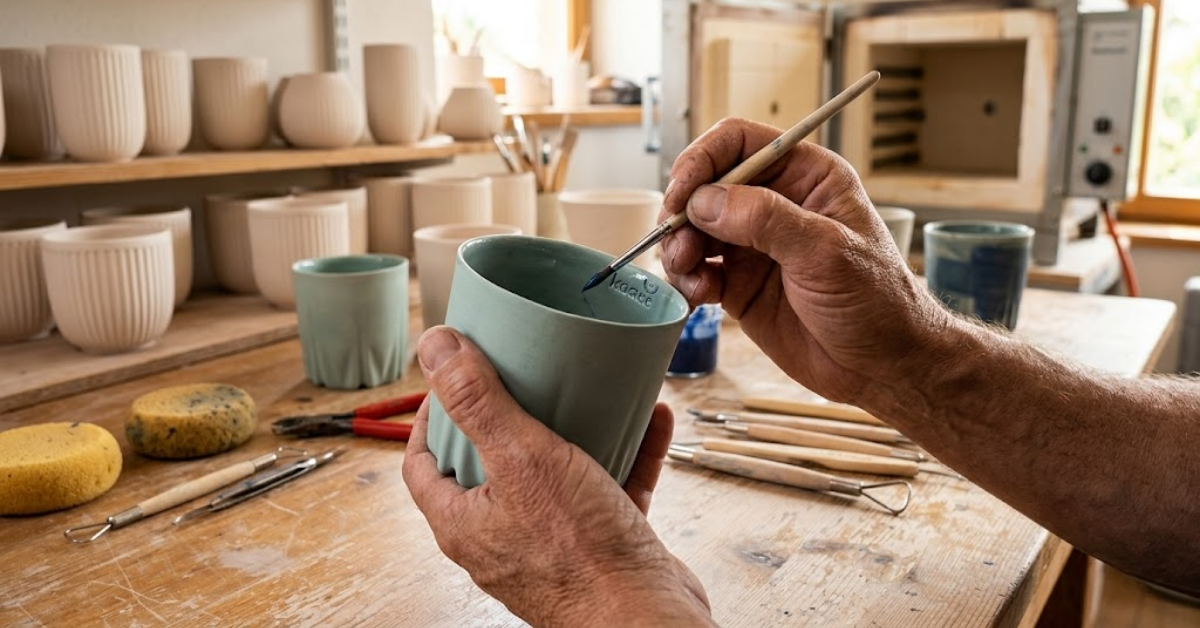
Then comes hand casting. Each piece is individually formed — poured into a mold by hand, or shaped on a wheel. The artisan controls the thickness, the proportions, and the details. After casting, the piece needs to dry slowly. If you try to speed up drying, the clay cracks or warps. Patience isn’t optional here, its required.
Once dry, each piece is carefully cleaned and smoothed by hand. Seam lines from molds are removed. Edges are refined. Surfaces are checked for any irregularities. All of this happens before the piece even enters the kiln for the first time.
The first firing takes about 24 hours at around 980°C. After that comes glazing or hand painting. For colored pieces — like the pastel-toned cups in the Macaron Collection — pigments are mixed into the porcelain or painted on by hand. Each color behaves differently in the kiln so experience matters enormously here.
Then the second firing. This one is even more intense — temperatures reaching 1250°C or higher. This is where the porcelain becomes hard, non-porous, and gets its final surface. And after all this work, not every piece makes it. Some crack during firing. Some warp. Some develop glaze defects that aren’t visible until after the kiln cools down. Those pieces get discarded.
From start to finish, a single handmade porcelain piece can take several days of work. And that’s for one cup or one bowl.
How Mass Production Works (And Why It’s Faster)
Factory-produced tableware follows a completely different approach. Machines do the heavy lifting. Industrial presses stamp out hundreds of plates per hour from pre-mixed materials. Automated glazing lines spray consistent coatings. Computer-controlled kilns run continuously.
The result? Identical pieces, produced quickly and cheaply. A factory can produce thousands of plates in a single day — the same number a small handmade studio might produce in months.
There’s nothing inherently wrong with mass production. It makes tableware affordable and accessible. But it does come with trade-offs: uniform pieces with no individual character, often made from lower-grade materials, and a manufacturing process designed for speed rather than craftsmanship.
The Quality Gap Is Real
When you compare the two side by side, the quality difference is noticeable. Here’s where handmade tableware typically wins out:
Materials: Handmade studios working with porcelain often use higher-grade clays. At Kaase Atelier, we use Limoges porcelain clay — the same material used in the finest French porcelain for over 250 years. Mass-produced tableware often uses cheaper ceramic blends that don’t offer the same translucency, whiteness, or durability.
Durability: High-temperature firing (1250°C+) creates a stronger, more durable product than lower-temperature factory firing. The vitrification process that happens at these extreme temperatures makes the porcelain non-porous and resistant to chipping.
Glaze Safety: Quality handmade studios are careful about what goes into their glazes. All colors and glazes at Kaase Atelier are lead-free, food safe, and non-toxic. Mass-produced imports, especially cheaper ones, don’t always meet the same safety standards.
Longevity: A well-made handmade porcelain piece can last decades — even generations. Many families pass down their porcelain serving bowls and plates as heirlooms. Mass-produced tableware tends to chip, fade, and wear out faster.
The Character of Imperfection
Here’s something that takes a while to appreciate: the small imperfections in handmade tableware aren’t mistakes. They’re signatures.
When a Dots & Stripes bowl has a dot that’s slightly larger than the others, that happened because a human hand painted it. When two cups from the same collection have a tiny difference in color tone, that happened because natural pigments react slightly differently in each firing. When a serving plate has a subtle unevenness to its rim, that happened because it was shaped by hand, not stamped by a machine.
These variations are what make each piece unique. Your cup is genuinely yours — no other one in the world is exactly like it. That’s something a factory simply cannot offer.
At Kaase Atelier, each piece is handmade, so even if it’s in the same form, pattern, and color, your piece is unique and has its own character. It brings its own energy and pleasure to your table.
Why Handmade Costs More (And Why It’s Worth It)
Lets talk about price. Handmade tableware costs more than mass-produced alternatives. That’s a fact. But when you understand what goes into each piece, the price makes sense.
A mass-produced mug might take 2-3 minutes of machine time to create. A handmade Limoges porcelain coffee cup from Kaase Atelier involves days of work: hand casting, slow drying, careful smoothing, first firing, hand painting or pigment application, second firing at 1250°C, quality inspection — and that’s assuming the piece survives both firings without defects.
You’re also paying for materials. Limoges porcelain clay costs significantly more than standard ceramic materials. Lead-free, food-safe glazes and pigments aren’t cheap either.
And you’re paying for skill. Hand casting porcelain, controlling kiln temperatures, applying colors that will behave predictably at extreme heat — these are skills that take years to develop. Every piece from a handmade studio carries that expertise.
When you choose handmade tableware, you’re choosing something that was created with intention and care. Something that will last. Something that has a story behind it — not just a barcode.
Choosing What’s Right for Your Table
Both handmade and mass-produced tableware have their place. If you need 20 identical plates for a large event on a budget, mass-produced is practical. No argument there.
But if you’re looking for tableware that reflects your personal style, that brings warmth and character to your dining experience, and that you’ll enjoy using for years to come — handmade is the way to go.
Browse the Kaase Atelier collections to see what handmade Limoges porcelain tableware looks and feels like. From the soft pastels of the Macaron Collection to the bold patterns of Dots & Stripes and the unique hand-painted scenes of the Art Series — every piece is made by hand in Istanbul with the same porcelain clay that built the reputation of Limoges.
Frequently Asked Questions
What makes handmade tableware better than mass-produced?
Handmade tableware uses higher-quality materials, goes through more careful production steps, and offers unique character in each piece. The firing temperatures are typically higher, which produces a stronger and more durable product. Each piece also has natural variations that make it one of a kind.
Is handmade porcelain safe for everyday use?
Yes, high-quality handmade porcelain is designed for daily use. At Kaase Atelier, all products are fired at 1250°C and use lead-free, food-safe, non-toxic glazes. You can use them for hot drinks, serving food, and regular meals.
Why does handmade tableware cost more?
The price reflects the time, materials, and skill involved. Handmade pieces require hours of labor per item, premium clay, two separate kiln firings, and hand-applied glazes or paint. A portion of pieces don’t survive the firing process, which also factors into the cost.
How can I tell if tableware is truly handmade?
Look for natural variations in color, shape, and pattern — these are signs of hand craftsmanship. True handmade pieces will have subtle differences even within the same collection. Also check the seller’s information about materials, firing temperature, and production process.
Does handmade tableware last longer than mass-produced?
Generally yes. Handmade porcelain fired at high temperatures (1250°C+) is extremely durable and resistant to chipping. Many handmade porcelain pieces are passed down through generations as family heirlooms.
Where can I buy handmade porcelain tableware?
You can shop handmade Limoges porcelain tableware at Kaase Atelier’s online store. Each piece is hand cast in Istanbul using Limoges porcelain clay, with collections ranging from coffee cups and bowls to serving plates and platters.