

Handmade Ceramics & Porcelain
How to Choose the Perfect Handmade Porcelain Coffee Cup
Apr
Not All Handmade Porcelain Is the Same
You’ve decided you want a handmade porcelain coffee cup. Good choice. But now you’re looking at dozens of options online and everything claims to be “handmade,” “artisan,” or “hand-crafted.” Some cost $15. Some cost $50 or more. They can’t all be the same thing — so what’s the difference?
Turns out, the difference is significant. The word “handmade” gets used pretty loosely in the ceramics world. Some products labeled as handmade are really just hand-finished — meaning a machine made the basic form and a person did some touching up. Others are genuinely made by hand from start to finish: hand-cast, hand-shaped, hand-painted, and individually fired in a kiln.
Knowing what to look for can save you from buying something disappointing — and help you find a coffee cup that’s actually worth keeping for years. Here’s what matters.
Check the Clay: Porcelain vs. Ceramic vs. Stoneware
The material your cup is made from determines almost everything about how it looks, feels, and performs. There are three main types you’ll encounter:
Earthenware is fired at lower temperatures (around 1000-1150°C). It’s the most basic and affordable option, but it’s also the most porous and fragile. Earthenware chips easily and can absorb liquids over time if the glaze develops hairline cracks. Fine for decorative pieces, but not ideal for a daily coffee cup.
Stoneware fires higher (1200-1300°C) and is denser, heavier, and more durable. It has a rustic, earthy feel and works well for everyday use. The downside? It’s heavy, typically opaque, and doesn’t have the refined elegance that porcelain offers.
Porcelain is the top tier. Made from kaolin clay mixed with feldspar and quartz, porcelain is fired at the highest temperatures (1250-1400°C). The result is a material that’s incredibly strong despite being thin, non-porous without needing heavy glazing, and has that signature translucent quality when held to light. If you want a handmade porcelain coffee cup that’s both beautiful and built to last, this is the material to look for.
Within porcelain, there’s another distinction worth knowing. Limoges porcelain — named after the French city where kaolin was first discovered in Europe — is considered the gold standard. It’s known for its exceptional whiteness, translucency, and ability to hold fine painted details. At Kaase Atelier, every coffee cup is made from Limoges porcelain clay.
Firing Temperature: Why It Matters for Your Cup
This is something most people never think about when buying a coffee cup, but it makes a huge difference in quality and durability.
When porcelain is fired at 1250°C or higher, a process called vitrification happens. The clay particles fuse together at a molecular level, creating a dense, glass-like structure. This makes the cup non-porous (it won’t absorb liquids or odors), chip-resistant, and much stronger than lower-fired alternatives.
A porcelain cup fired at 1250°C will handle boiling water, dishwasher cycles, and years of daily use without losing its finish or structural integrity. A lower-fired cup might start showing wear — crazing in the glaze, staining, or chipping — within months.
When you’re evaluating a handmade porcelain coffee cup, ask about the firing temperature. If the seller doesn’t mention it at all thats usually not a good sign. Reputable makers are proud of their firing specs because they know it’s a mark of quality. At Kaase Atelier, every piece is fired at 1250°C — and we say that because it matters.
Glaze Safety: What’s Actually on Your Cup
You drink from this thing every day. Whatever’s on the surface is in contact with your coffee, your tea, your lips. Glaze safety isn’t optional — it’s the most important factor after the clay itself.
What to look for: glazes that are explicitly labeled as lead-free, food-safe, and non-toxic. This isn’t just about meeting regulations — it’s about peace of mind. Some cheaper imports, especially those with bright red, orange, or yellow glazes, can contain lead or cadmium. These metals can leach into hot liquids over time.
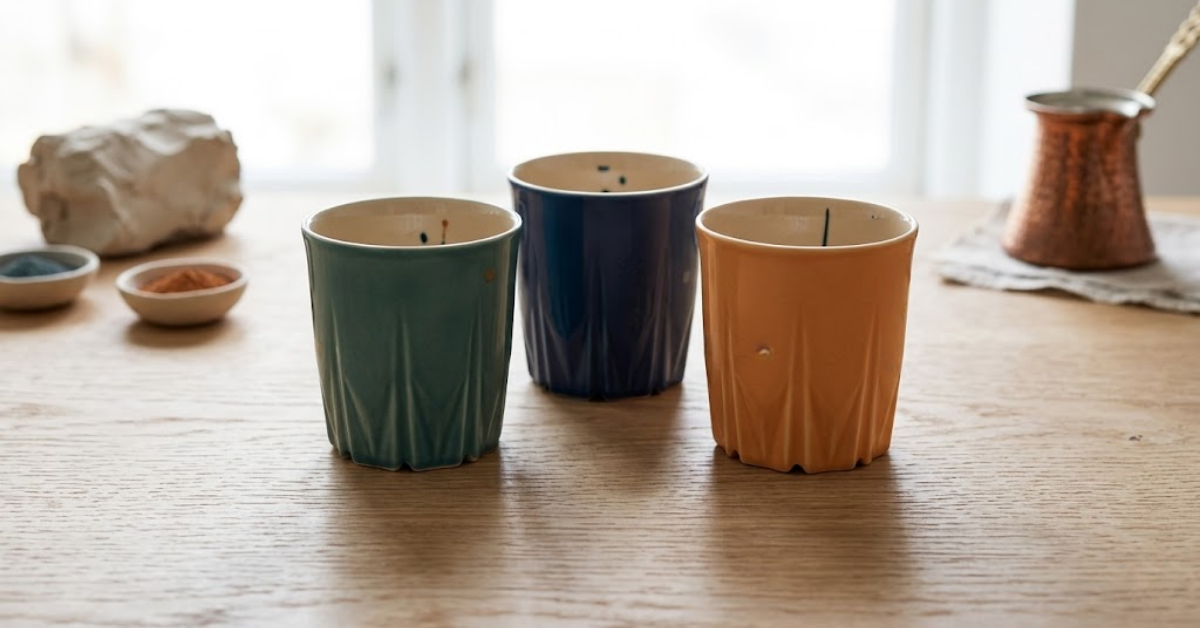
All Kaase Atelier coffee cups use lead-free, food-safe, non-toxic glazes and pigments. The colors in our Macaron Collection — those soft pastel tones — come from pigments mixed directly into the porcelain clay body, not applied as surface paint. They’re fired into the material at 1250°C, making them permanent and completely safe.
Handmade vs. “Handmade”: How to Tell the Difference
This is where things get tricky. The term “handmade” has no universal legal definition in the ceramics industry. A cup that’s slip-cast by machine and then hand-dipped in glaze can technically be marketed as “handmade.” A cup that’s entirely shaped, decorated, and finished by hand is also “handmade.” Obviously, these are very different levels of craftsmanship.
Here are signs that a porcelain coffee cup is genuinely handmade:
Natural variations between pieces. If every cup in a “handmade” collection looks absolutely identical, it probably wasn’t made by hand. Real handmade cups will have subtle differences — a slight variation in thickness, a small difference in how the glaze pooled, a brushstroke that’s unique to each piece. These aren’t defects. They’re proof that a human made it.
Information about the maker. Real handmade studios are usually happy to tell you about their process, their materials, and who actually makes the pieces. If a product listing gives you nothing but “handmade with love” and no details about clay type, firing temperature, or where it’s produced, be skeptical.
Small batch production. Genuinely handmade porcelain comes from small studios producing limited quantities. If a “handmade” mug has 10,000 reviews and is always in stock in every color, its probably mass-produced with some hand-finishing.
Price that reflects the work. Hand casting, multiple kiln firings, hand painting — these take time, skill, and energy. A genuinely handmade Limoges porcelain coffee cup will cost more than a factory alternative. If a “handmade porcelain” mug costs $10, the math doesn’t add up.
Shape, Size, and How the Cup Feels
After material and quality, think about how the cup fits your coffee habits. A few things to consider:
With handle or without? Handleless porcelain cups (tumblers) are increasingly popular for espresso, Turkish coffee, and small servings. They feel more intimate in your hands and have a clean, modern look. Handled mugs are better for larger drinks and for people who prefer a traditional grip. At Kaase Atelier, we offer both styles — our Macaron Collection includes Arch (handled), Crystal, and Regular (handleless) variations.
What size do you need? A 200ml cup is perfect for espresso, Turkish coffee, or a small tea. If you’re a large coffee drinker, you’ll want something bigger. Match the cup to what you actually drink, not what looks good in photos.
Weight and balance. Pick up the cup (or read detailed reviews about how it feels). Good porcelain should feel light but substantial — not paper-thin and fragile, but not heavy and clunky either. The wall thickness should be even, and the cup should sit flat without wobbling.
Finding Your Style
Once you’ve confirmed the quality basics — good clay, high firing temperature, safe glazes, genuinely handmade — the fun part is choosing a style that fits your personality.
Do you prefer clean, solid colors? The Macaron Collection offers handmade porcelain coffee cups in pastel tones — petrol green, dark blue, grey, orange, brown, white. The color is pigment mixed into the porcelain clay itself, giving each cup a soft, warm glow.
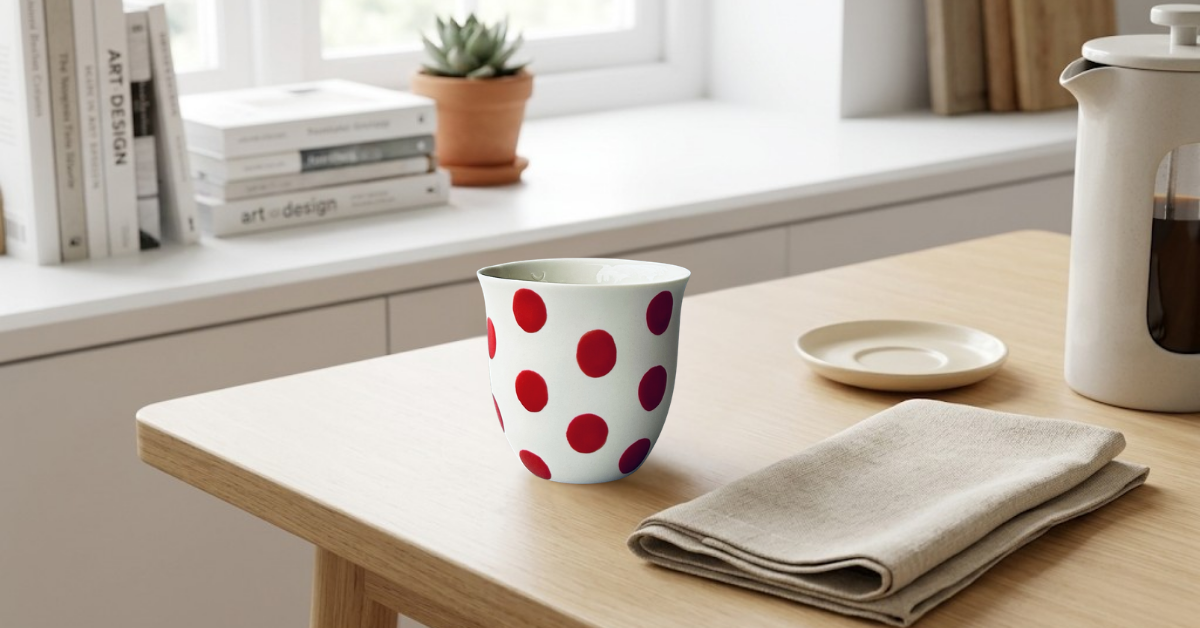
More into bold patterns? The Dots & Stripes Collection features geometric designs — polka dots, stripes, and combinations — hand-painted on white porcelain. These are statement pieces that add character to any table.
Want something truly unique? The Art Series features one-of-a-kind hand-painted scenes on each cup. Every single piece has a different artistic design, from yoga poses to coral motifs to abstract illustrations.
Browse the full Kaase Atelier collection to find the handmade porcelain coffee cup that fits your style.
Frequently Asked Questions
What is the best material for a coffee cup?
Porcelain — specifically kaolin-based porcelain fired at 1250°C or higher — is considered the best material for coffee cups. It’s non-porous, chip-resistant, lightweight, and retains heat well. Limoges porcelain is the gold standard within this category.
How do I know if a porcelain coffee cup is truly handmade?
Look for natural variations between pieces (slight differences in color, shape, or pattern), detailed information about materials and process from the maker, small batch production, and pricing that reflects the labor involved. If every piece looks machine-perfect, it probably is.
Is handmade porcelain safe for hot drinks?
Yes, when properly made. Porcelain fired at 1250°C+ is extremely heat-resistant and designed for hot beverages. Always check that the maker uses lead-free, food-safe glazes. All Kaase Atelier products meet these safety standards.
What is the difference between porcelain and ceramic coffee cups?
Porcelain is a type of ceramic, but it’s made from higher-grade clay (kaolin) and fired at much higher temperatures. This gives porcelain its distinctive whiteness, translucency, and superior durability compared to earthenware or basic stoneware ceramics.
How long does a handmade porcelain coffee cup last?
A well-made handmade porcelain coffee cup fired at high temperatures can last decades with proper care. Many families pass down quality porcelain tableware through generations. The key is choosing pieces with strong vitrification (high firing temperature) and durable glazes.
Where can I buy handmade porcelain coffee cups online?
You can shop a range of handmade Limoges porcelain coffee cups at Kaase Atelier. Each cup is hand-cast in Istanbul from Limoges porcelain clay, fired at 1250°C, with lead-free food-safe glazes. Collections include Macaron (solid pastels), Dots & Stripes (geometric patterns), and Art Series (hand-painted scenes).
Why are handmade porcelain coffee cups more expensive?
The price reflects premium materials (kaolin clay, food-safe pigments), days of skilled labor per piece, two separate kiln firings at extreme temperatures, and the reality that a portion of pieces don’t survive the production process. You’re paying for craftsmanship and durability, not just a container for coffee.